
 英語
英語 フランス
フランス スペイン
スペイン ロシア
ロシア 韓国
韓国 日本
日本


High Methoxyl Citrus Pectin Powder | Standardized 150 SAG
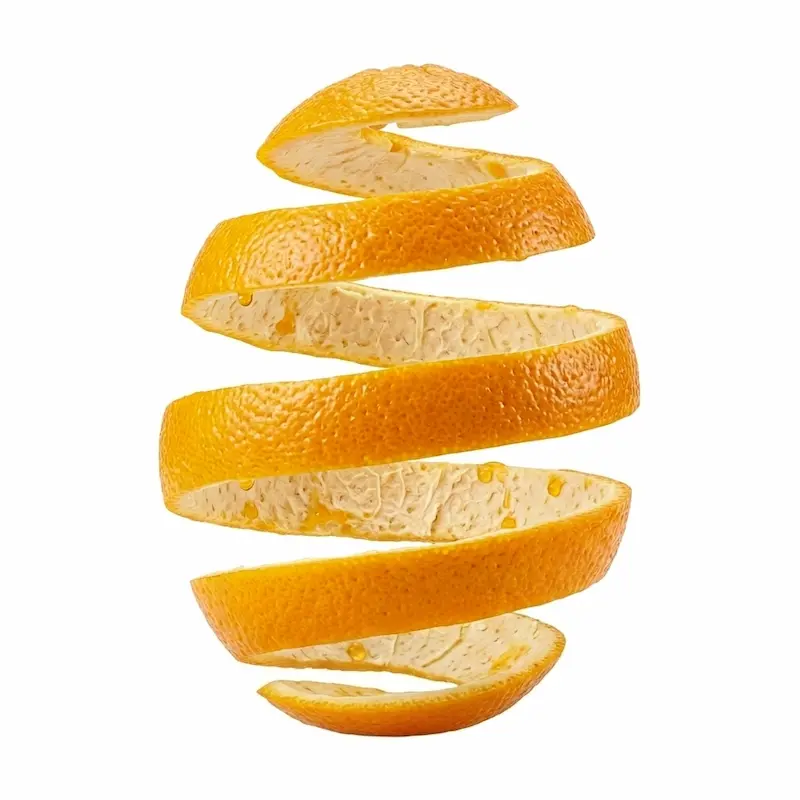
Botanical Source: Dried rinds of Citrus limonとCitrus sinensis
CAS No.: 9000-69-5
Degree of Esterification (DE): 65.0% – 75.0%
Gel Strength: 150° SAG ± 5 (IFT Standard Cox Jelly Test)
Aqueous pH (1% Solution): 2.8 – 3.4
Particle Size: 100% through 80 mesh (D50: 120–180 μm)
Sulfur Dioxide (SO₂): ≤ 10 ppm
Regulatory Compliance: Compliant with Regulation (EC) No 396/2005 & US EPA limits
Certificates: BRCGS, IFS, COSMOS, Organic (USDA/EU), Halal, Kosher
Sample: 10–50g Free Sample Available for R&D
- 記述
- データシート
-
WhatisHigh Methoxyl Citrus Pectin Powder?
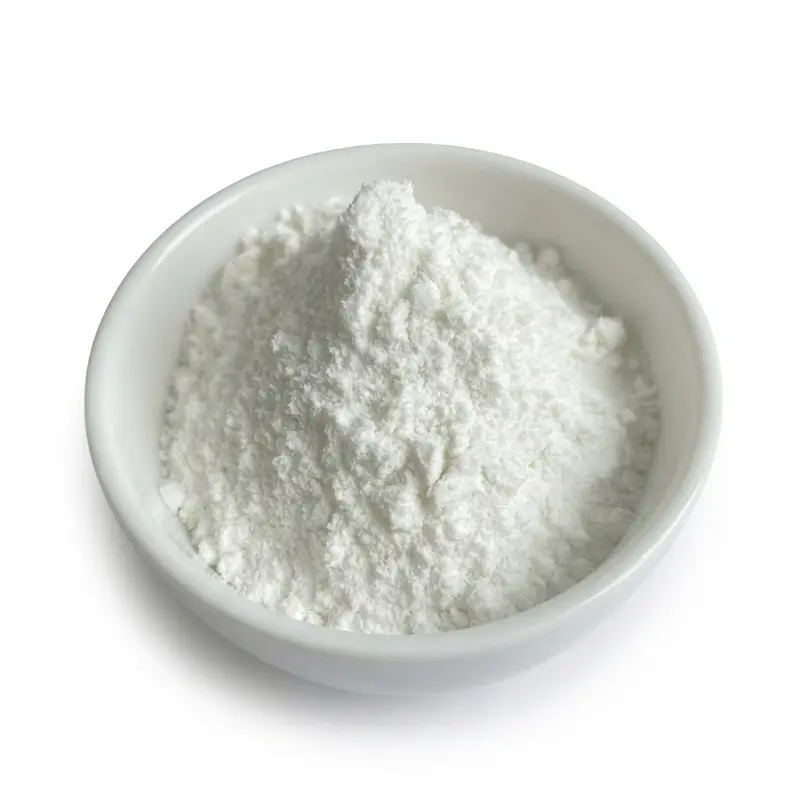
High Methoxyl Citrus Pectin Powder (INS No。 440 / E440i), supplied by グリーン・春技術, operates as a structural galacturonan hydrocolloid derived from 柑橘リモンとCitrus sinensis with a regulated Degree of Esterification (DE) of 65% to 75%。
In factory formulation systems maintaining Total Soluble Solids (TSS) ≥ 55%とa pH range of 2。8 to 3.4, this non-amidated substrate constructs a thermo-reversible viscous gel network stabilized via cross-linked hydrogen bonding.
The engineered 80-mesh powder geometry (D50: 120–180 μm) standardizes initial hydration kinetics, eliminating macro-colloidal agglomeration during scaled high-shear dispersionとyielding a consistent gel strength of Standardized 150° SAG ± 5.
To match the automated cooling cycles of high-speed confectionery depositing lines, the production output is standardized into two processing profiles on the shop floor: Ultra-Rapid Set (DE 72%–75%) and Rapid Set (DE 65%–71%).
规格:
商品名
High Methoxyl Citrus Pectin Powder (HMP)
CASない
9000-69-5
ソース Dried rinds of 柑橘リモン and Citrus sinensis Galacturonic Acid ≥ 65.0% (Calculated on ash-free, dried basis) Degree of Esterification (DE) 65.0% – 75.0% (Ultra-Rapid Set / Rapid Set profile) Gel Strength 150° SAG ± 5 (IFT Standard Cox Jelly Test) Total Ash Content ≤ 5.0% (Acid-Insoluble Ash ≤ 1.0%) Particle Size 100% through 80 mesh (D50: 120–180 μm) Solubility Performance Completely dispersible under shop-floor shear agitation Aqueous pH (1% Solution) 2.8 – 3.4 (Acid-dependent industrial gelling zone) Loss on Drying (LOD) ≤ 12.0% (Gravimetric assessment) Sulfur Dioxide (SO₂) ≤ 10 ppm (Confectionery-grade entry limit) Heavy Metals Pb ≤ 1.0 ppm, As ≤ 0.5 ppm, Cd ≤ 0.1 ppm, Hg ≤ 0.1 ppm Microbiological Controls TAMC ≤ 1,000 CFU/g; TYMC ≤ 100 CFU/g
Salmonella spp. absent in 25g; E. coli absent in 10gPesticide Residues Compliant with Regulation (EC) No 396/2005 / US EPA 見積もりをお探しですか?连络Request a Custom QuoteQuality & Compliance
Monograph Standards: Fully compliant with JECFA, FCC, and EU E440 purity limits, meeting global food chemical codex specifications.
GFSI Certificates: Audited and certified under BRCGS (BRC) and IFS global safety standards for manufacturing site qualification.
System Standards: Operating strictly under verified ISO 9001, ISO 22000, and HACCP quality management architectures.
Dietary Cross-Certifications: Registered with the FDA with verified Kosher and Halal dietary suitability certificates for global market access.
Clean-Label Accreditations: Available in validated COSMOS, USDA Organic, and EU Organic industrial batches for regulatory compliance.
Compliance Statements: Supported by verifiable Non-GMO, Allergen-Free, and BSE/TSE-Free official manufacturer declarations.
Heavy Metals Control: Verified via ICP-MS (Pb ≤ 1.0 ppm, As ≤ 0.5 ppm, Cd ≤ 0.1 ppm, Hg ≤ 0.1 ppm) to match Proposition 65 requirements.
Pesticide Residue Limits: Validated compliant with European Parliament Regulation (EC) No 396/2005 and US EPA limits.
3rd-Party Validation: Every production batch undergoes independent cross-testing by accredited ISO 17025 contract laboratories.
Regulatory Documentation: Batch-specific COA, MSDS, and multi-residue pesticide logs are provided to accelerate incoming QA audit clearance.

Key Advantages
Standardized Gelling Power: Controlled 150° SAG ± 5 gel strength ensures reproducible batch-to-batch structural viscosity, delivering predictable texture replication during commercial processing cycles.
Calibrated Setting Kinetics: The specialized Ultra-Rapid Set and Rapid Set processing profiles match specific thermodynamic cooling windows required by continuous industrial depositing lines.
Thermal Process Resilience: The macromolecular backbone chains resist thermal degradation and viscosity loss during standard high-temperature short-time (HTST) pasteurization and UHT fluid operations.
Syneresis Suppression: High hydrocolloid water-binding capacity minimizes serum separation and moisture weeping in high-solids fruit matrices throughout the established shelf life.
Sugar-Acid Matrix Stability: The botanical substrate is chemically optimized to construct cohesive hydrogel networks across Total Soluble Solids (TSS) ≥ 55% and a pH range of 2.8 to 3.4.
Sensory Neutrality: Multi-stage aqueous purging isolates the active galacturonan, removing volatile organic residues and guaranteeing clean flavor release without requiring structural masking agents.
Agglomeration-Free Dissolution: The standardized 80-mesh powder geometry (D50: 120–180 μm) provides predictable surface hydration kinetics, eliminating micro-colloidal fish-eyes in high-shear blending tanks.
Structured Vegan Gelation: Operating as a plant-derived alternative to animal-derived hydrocolloids, the ingredient delivers a clean-cutting, thermo-reversible texture profile in standardized confectionery formulations.
Applications
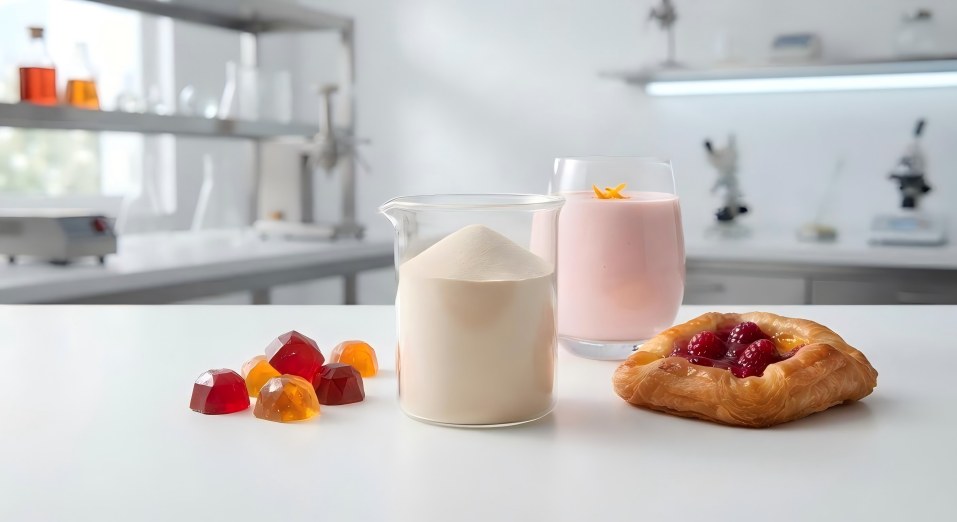
Plant-Based Gummy Confectionery: The ingredient serves as a hydrocolloid texturizer in automated mogul lines for expanding vegan pectin gummies, vitamin chewable pastilles, and supplement soft chews. It delivers a clean, elastic bite and sharp mold definition within systems maintaining Total Soluble Solids (TSS) ≥ 55% and a pH range of 2.8 to 3.4, ensuring zero sticky residue on depositing pumps.
High-Solids Fruit Preparations: The substrate operates as the core structural gelling agent in traditional high-sugar fruit spreads, industrial pastry glazes, and confectionery fruit fillings. At the calibrated Aqueous pH (1% Solution) of 2.8 – 3.4, it establishes rapid, thermo-reversible gelation, preventing phase separation or moisture weeping during standard packaging cycles.
Pulp-Suspended Juices & RTD Beverages: In functional juice matrices and ready-to-drink botanical beverages where localized formulation indexing permits, the texturizer constructs a highly stable pseudoplastic fluid network. This controlled rheological profile maintains active insoluble particles and native fibers in uniform suspension without altering the sensory palate.
Technical FAQ
Q1: What are the target pH limits and TSS requirements for achieving standardized gelation with High Methoxyl Citrus Pectin Powder (INS No. 440)?
A: High Methoxyl Citrus Pectin Powder (INS No. 440) requires a restrictive environment maintaining Total Soluble Solids (TSS) ≥ 55% and a controlled pH range of 2.8 to 3.4.
Operating below pH 2.8 accelerates premature hydrogen bonding, generating coarse macro-colloidal clots that clog factory filters. Exceeding pH 3.4 induces carboxyl deprotonation, increasing electrostatic repulsion that prevents cross-linking and causes product deformation.
Q2: What is the thermodynamic profile for Standardized 150° SAG Pectin, and how must the line sequence be configured to prevent pre-gelation inside automated depositing hoppers?
A: Standardized 150° SAG Pectin exhibits a strict gelation onset temperature between 80°C and 85°C, maintaining a kinetic setting velocity of 10 to 15 minutes under standardized Cox tests.
To eliminate pre-gelation inside jacketed holding tanks, the liquid acidifying agent must be metered into the batch matrix at the final phase of vacuum boiling immediately prior to continuous mechanical deposition. The inline material temperature must remain strictly above 85°C.
Q3: How does E440i Rapid Set Pectin function under automated high-speed gummy deposition loops, and what are its physical degradation thresholds during sustained thermal holding?
A: E440i Rapid Set Pectin delivers a low hot-shear viscosity profile that reduces head pressure on mechanical pumps, eliminating nozzle stringing artifacts on high-speed continuous mogul lines.
The macromolecular chains withstand industrial holding vessel temperatures of 85°C to 90°C for up to 2 to 3 hours without undergoing structural chain cleavage.
This thermal process resilience limits glycosidic bond hydrolysis, restricting final gel strength deviation under 5% of the original Standardized 150° SAG ± 5 release metrics to guarantee uniform multi-batch cohesion.
Why Partner With Green Spring Technology?
Established Botanical Authority: Founded in 2000, Green Spring Technology maintains a long-term operational history in hydrocolloid refinement, supplying standardized plant-derived texturizers to industrial brands across over 62 countries.
Scaled Contract Supply Security: Green Spring Technology buffers seasonal citrus crop volatility through strategic agricultural raw material reserves, facilitating continuous bulk volume replenishment and price predictability for annual institutional contracts.
Audit-Ready Global Certifications: Procurement risk mitigation is supported by immediate technical access to verified site and product accreditations, including BRCGS, IFS, ISO 22000, Kosher, Halal, and Organic certificates.
On-Site Process Engineering Support: The enterprise retains dedicated food scientists to assist downstream R&D teams during active factory trials, streamlining the calibration of industrial depositor temperatures, pH curves, and solid levels.
-
Download Data Sheet: COA, TDS, MSDS Please fill in the form below to receive the full technical documents via email.