
 英語
英語 フランス
フランス スペイン
スペイン ロシア
ロシア 韓国
韓国 日本
日本


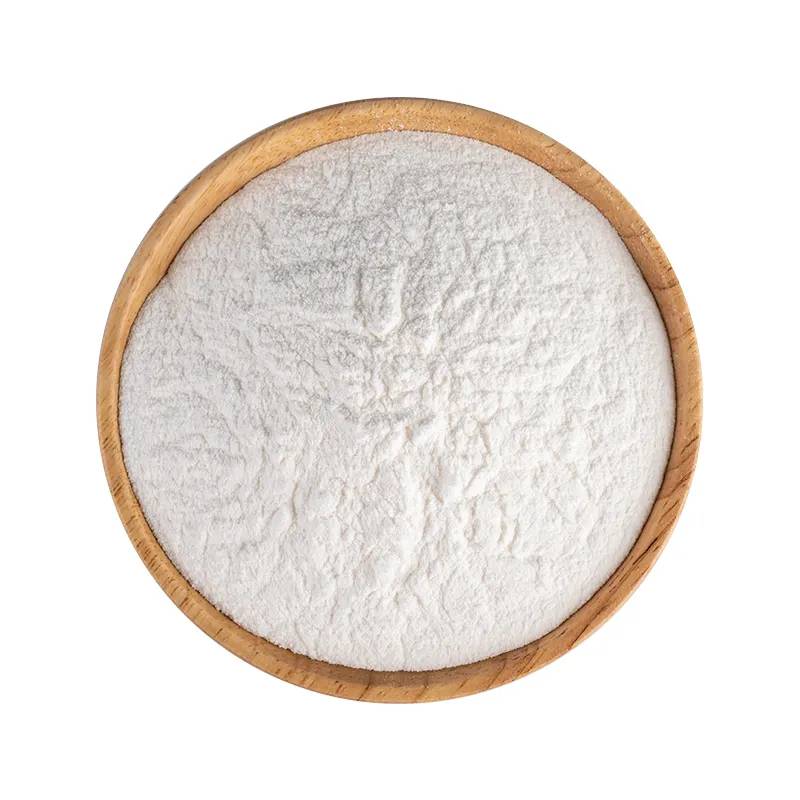
Melatonin Powder Assay ≥ 99.5% | USP/EP Grade Supplier
CAS No.:73-31-4
Source: Microbial Fermentation (Non-Synthetic)
Assay (Dried Basis): 99.5% – 101.5% by HPLC
Impurities Boundary: "Peak E" Impurity ≤ 10 ppm (EP 2.2.29)
Residual Solvents: Ethanol ≤ 3,000 ppm, Methanol ≤ 500 ppm [ICH Q3C / USP <467>]
Certificate: BRCGS, IFS, Halal, Kosher
Sample: 10-50g Free Sample Available for R&D
- 記述
- データシート
-
What is メラトニン粉 Assay ≥ 99。5%?
メラトニン粉 (CASない 73-31-4) is a high-purity, crystalline functional ingredient manufactured via a standardized microbial fermentation pathway. The solid-dosage material is specifically granulatedとperformance-tested to satisfy the rigorous identification and potency criteria defined in current USP (United States Pharmacopeia) and EP (European Pharmacopeia) monographs.
Formulated as an organic solvent-free matrix, the bulk material undergoes multi-stage crystallization to strictly confine toxicological impurities, ensuring that Peak E structural analogues remain below regular pharmacopeia detection thresholds. This production control streamlines global supply chain access by providing foreign buyers with pre-verified technical documentation necessary to pass cGMP vendor qualification audits and international customs boundary inspections.
The physical architecture of the powder is engineered for seamless cross-docking onto high-speed manufacturing floors. By stabilizing critical physical properties—including bulk density, tapped density, and a verified particle size distribution (100% passing 80 mesh)—the material maintains predictable flow behavior in mechanical hoppers, mitigating the risks of powder segregation, mass variation, or mechanical binding during commercial-scale tablet compression and hard-capsule filling operations.
仕様
商品名
Melatonin Powder
ソース
Microbial Fermentation
CAS No.
73-31-4
Assay (Dried Basis)
99.5% – 101.5%
Testing Method
HPLC
外観
White to off-white crystalline powder
融点 116.0℃ – 118.0℃ by USP <741> / EP 2.2.14
Loss on Drying ≤ 0.5% by USP <731> 80℃ under vacuum for 3 hours Residue on Ignition (Ash) ≤0.1% by USP <281> / EP 2.4.14 Bulk Density 0.40 – 0.60 g/mL by USP <616> Method I Tapped Density 0.55 – 0.75 g/mL by USP <616> Method I Particle Size 100% through 80 mesh (D50: 120–180 μm) by USP <786> "Peak E" Impurity ≤10 ppm by High-Resolution HPLC (EP 2.2.29) Organic Impurities Single Unknown ≤0.10%, Total≤ 0.50% by USP Melatonin RS Heavy Metals (ICP-MS) Pb ≤ 0.5 ppm, As ≤ 0.5 ppm, Cd ≤ 0.2 ppm, Hg ≤ 0.1 ppm [USP <233> / EP 2.4.20] Residual Solvents (GC-HS) Ethanol ≤ 3,000 ppm, Methanol ≤ 500 ppm, Class 1/2 N.D. [ICH Q3C / USP <467>] Pesticide Residues Complies with (EC) No 396/2005 & USP <561> [GC-MS/MS / LC-MS/MS] Microbiological Security TAMC ≤ 1,000 cfu/g, TYMC ≤ 100 cfu/g, Salmonella: Absent/25g, E. coli: Absent/10g 見積もりをお探しですか?连络Request a Custom QuoteQuality & Compliance
Standardized Analytical Validation
Production processes execute analytical verification via internal quality laboratories equipped with HPLC, GC-HS, and ICP-MS testing instruments. Every commercial lot is monitored to satisfy defined chemical limits, ensuring stable batch-to-batch chemical homogeneity and reproducible particle distribution profiles on the manufacturing floor.Monograph & Impurity Compliance
Engineered for regulated global healthcare markets, this crystalline biomolecule satisfies the chemical identity, potency, and purity specifications defined in current USP and EP monographs. Analytical parameters are fully calibrated to match international regulatory thresholds, facilitating integration into multi-ingredient supplement formulations.Toxicological & Solvents Risk Management
Production parameters confine impurities to ensure "Peak E" structural analogues remain ≤ 10 ppm and residual solvents comply with ICH Q3C / USP <467> boundaries (Ethanol ≤ 3,000 ppm, Methanol ≤ 500 ppm). Technical dossiers, including batch-specific COA, MSDS, and 24-month Real-time Stability Data, are provided for vendor qualification.Manufacturing Frameworks & Registration
Green Spring Technology maintains standardized international food safety frameworks to support global cross-border supply chain continuity. The manufacturing base operates under verified cGMP protocols, holds valid BRCGS and IFS Food certificates, and satisfies necessary foreign facility registration requirements for customs clearance.Dietary & Traceability Status
Every production lot undergoes structured verification to guarantee compliance with international market entry criteria. The bulk ingredient is fully supported by valid Halal and Kosher dietary certificates, alongside an official Non-GMO identity statement to fulfill clean-label supply chain auditing parameters.
Key Advantages
Engineered Powder Flowability & Uniformity
The crystalline matrix features 100% passing 80 mesh particle geometry and a stable Hausner Ratio of ≤ 1.25. This precise configuration prevents powder segregation inside dry-blending V-blenders, directly mitigating mass variation risks and securing uniform content distribution across commercial-scale, high-speed capsule filling lines.High Compaction Matrix for Direct Compression
Calibrated bulk density (0.40–0.60 g/mL) and tapped density (0.55–0.75 g/mL) anchor a predictable Carr's Index within the 15%–25% range. This mechanical compressibility allows for seamless direct compression (DC) without wet granulation when blended with microcrystalline cellulose (MCC), keeping tablet friability within ≤ 0.5% limits.Thermal Stability in Wet Granulation
A stable melting point of 116.0°C–118.0°C paired with a low initial moisture profile (Loss on Drying ≤ 0.5%) guarantees high thermal tolerance. In wet granulation processing, the active compound resists chemical degradation and polymorph transformation under fluid-bed drying conditions up to 60°C, preventing potency decay.Excipient Compatibility & Moisture Control
The active molecule demonstrates chemical compatibility with dicalcium phosphate, lactose, and magnesium stearate without cross-linking. With a critical relative humidity (CRH) stabilized near 65%, the powder retards atmospheric moisture-uptake, eliminating tablet tooling filming and capping under standard shop-floor environments running at RH ≤ 40%.Monograph Verification & Assay Tracking
Every supply lot ensures strict alignment with current USP and EP monograph impurity thresholds, limiting single unknown impurities to ≤ 0.10%. This rigorous purity profiling eliminates chromatographic interference during downstream HPLC assay validation, streamlining cross-border analytical method transfer and vendor qualification.Applications
Two-Piece Hard Capsule Shell Filling
Optimized for automatic intermittent-motion capsule filling machines running at speed thresholds of ≥ 80,000 capsules/hour. The predictable tapped density (0.55–0.75 g/mL) ensures uniform slug formation during tamping-pin compression, maintaining fill-weight variations within a strict ± 3% absolute deviation in standard size 00, 0, and 1 hard gelatin or hypromellose (HPMC) capsule shells.Direct Compression Tableting Matrice
Engineered as a high-flow crystalline agent suitable for direct compression (DC) solid-dosage matrices without a preliminary wet-granulation step. When blended with agglomerated lactose or microcrystalline cellulose (MCC), the powder maintains granular mechanical interlocking, sustaining tablet hardness ≥ 80 N and controlling tablet friability within ≤ 0.5% boundaries under industrial rotary press compression forces.Multi-Ingredient Dry-Powder Blend Sachet
Calibrated at an exact grain distribution of 100% passing 80 mesh to prevent mass segregation when blended into bulk powdered beverage matrices. The low static-charge retention minimizes electrostatic agglomeration with adjacent micronutrients, ensuring active substance distribution homogeneity when dry-mixed with standard diluents, sweeteners, and acidulants inside ribbon blenders.Modified-Release Matrix Formulations
The stable crystalline morphology and low organic impurity profile (Single unknown ≤ 0.10%) prevent unexpected chemical cross-linking with hydrophilic polymer matrices. This chemical inertness ensures a predictable zero-order or first-order dissolution release rate curve when formulated with high-viscosity hydroxypropyl methylcellulose (HPMC K100M) or ethylcellulose for overnight sustained-release tablet architectures.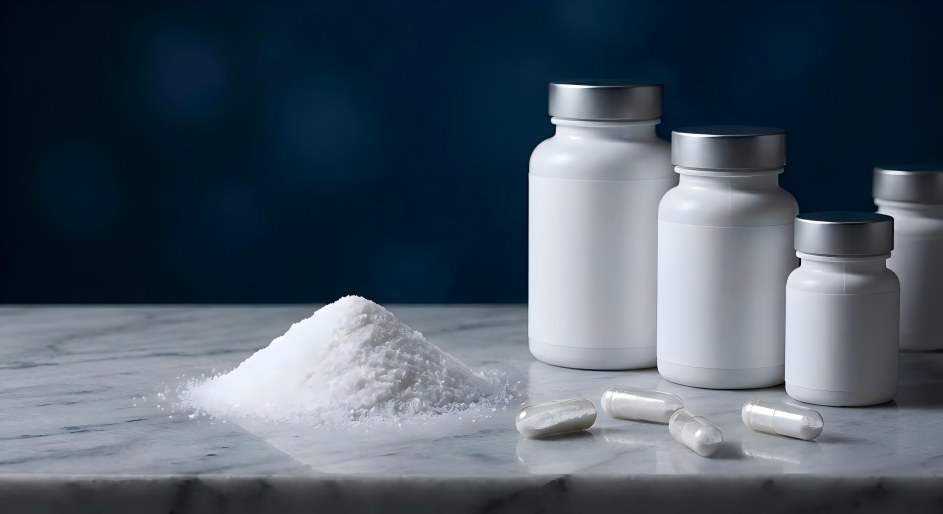
99.9% Pure Fermented Melatonin Powder for high-end capsule and tablet formulations
Technical FAQ
Q1: How does the crystalline melatonin bulk powder safeguard formulation limits against process-related "Peak E" anomalies during industrial dosage line processing?
A1: Green Spring Technology deploys gradient-elution HPLC with photo-diode array (PDA) detection to profile all downstream fractions. This quality validation restricts "Peak E" structural analogues strictly to ≤ 10 ppm and unknown related substances to ≤ 0.10%, guaranteeing that the refined botanical-identical biomolecule remains well within current USP and EP monograph impurity thresholds without batch rejection.Q2: What is the significance of the 116.0°C–118.0°C melting point range specified for this fermented melatonin crystalline matrix during industrial high-shear dry blending?
A2: The narrow 116.0°C – 118.0°C thermal range serves as a critical thermodynamic indicator of a stable, uniform crystalline lattice structure. By verifying sharp thermal collapse via capillary analysis, the material minimizes polymorph transformation and surface moisture sorption when subjected to mechanical heat inside high-shear blenders, eliminating the risk of active potency decay during large-scale warehousing.Q3: How do the physical powder specifications of this granulated fermented melatonin solve content uniformity failure during micro-dose solid oral dosage tableting?
A3: To satisfy USP <905> Uniformity of Dosage Units in micro-dose matrices (0.5mg to 3mg), the powder targets optimal flow properties instead of mere assay spikes. By aligning a 100% passing 80 mesh (D50: 120–180 μm) geometry with a calibrated bulk density of 0.40–0.60 g/mL, the material maintains stable flowability without powder segregation or hoppers bridging during high-speed, automated compression runs.Why Partner With Green Spring Technology?
Risk Mitigation & Audit Readiness
The manufacturing infrastructure operates under verified cGMP protocols, holding valid BRCGS and IFS Food certificates. Standardized technical documentation packages—including batch-specific HPLC chromatograms, heavy metal profiles, and 24-month Real-time Stability Data—are systematically provided to satisfy internal and third-party regulatory audits.Supply Chain Continuity & Scaling
Industrial production configurations feature an annual output capacity of 35 metric tons with single-batch blending uniformities reaching 35 tons. Strategic buffer stocks are maintained at central temperature-controlled warehouses to hedge against market pricing volatility and guarantee continuous raw material supply for large-scale commercial manufacturing.Stringent Analytical Alignment
Quality clearance protocols run every delivery lot through an internal analytical matrix equipped with HPLC, GC-HS, and ICP-MS testing instruments. Every supply batch is cross-checked against current USP and EP monograph limits, ensuring that the functional active ingredient integrates with adjacent formulation components without processing failure.Proactive Technical & Regulatory Support
Technical integration extends direct engineering assistance to downstream formulation teams. From delivering specific particle size distribution curves to adjusting bulk density parameters for target compaction matrices, the technical framework resolves tableting and encapsulation operational challenges, accelerating regulatory filing timelines and customs clearance. -
Download Data Sheet: COA, TDS, MSDS Please fill in the form below to receive the full technical documents via email.