

 英語
英語 フランス
フランス スペイン
スペイン ロシア
ロシア 韓国
韓国 日本
日本Rosemary Extract Oil vs. Powder: Optimizing Natural Meat Preservatives
Globalmeatprocessorsare rapidly replacing synthetic BHA, BHT,とnitrites with natural rosemary extract。 While carnosic acid effectively retards lipid oxidationとlocks in red myoglobin color, transferring this botanical defense into high-speed blending lines introduces a critical engineering hurdle: achieving homogenous molecular dispersion across viscous water-and-fat emulsions。
During high-volume sausage chopping, ham tumbling, or beef grinding, injecting standard rosemary extract powder often triggers immediate material aggregation。 This causes persistent powder clumping and severe mixing blind spots。
When active molecules clump, large portions of the batch remain unprotected。 This localized stabilization failure leads to pocketed lipid rancidity, premature browning in retail display cases, and costly commercial shelf-life rejections。
To eliminate these processing defects, plant engineers must select the optimal physical form—standardized liquid oils versus refined dry powders—matched to their existing automated dosing systems。
Physical Form Dynamics: Oil vs. Powder in Lipophilic Matrices
Processed meat stability depends on a uniform protein-lipid matrix. When oxidation begins, free radicals attack surface animal fats. To prevent rapid sensory degradation, natural antioxidants must match the physical state of the lipid substrate, ensuring immediate free-radical interception.
Formulators must evaluate how standardized rosemary extract oil performs against refined powder inside lipophilic matrices. Liquid oil blends bypass dissolution delays, embedding active carnosic acid directly into lipid long-chains, whereas raw powders struggle to breach surrounding moisture barriers in meat paste.
Once incorporated, oil-based extracts establish an immediate, continuous molecular shield. This fluid dispersion eliminates the lag time required for dry crystals to solubilize, neutralizing lipid peroxy radicals uniformly before they destabilize red myoglobin pigments.
The operational parameters and processing attributes of rosemary oil versus powder variants are structured below:
Physical Parameter | Standardized Oil Blend (10%–50%) | Industrial Processing Impact | |
Lipid Solubilization | Requires pre-dissolving phase | Instant molecular dispersion | Oil form bypasses mixing blind spots in animal fats. |
Process Delivery | Manual dry-bin batching | Automated pump / injection | Oil integrates perfectly into modern brine injectors. |
Clumping Risk | High in high-moisture meat mash | Zero clumping / Zero residue | Oil ensures every gram of meat gets identical active dosage. |
Color Protection | Slower activation speed | Immediate oxidation shield | Oil locks in myoglobin stability instantly to prevent graying. |
Engineering Efficacy: Solving Injection and Discoloration Bottlenecks
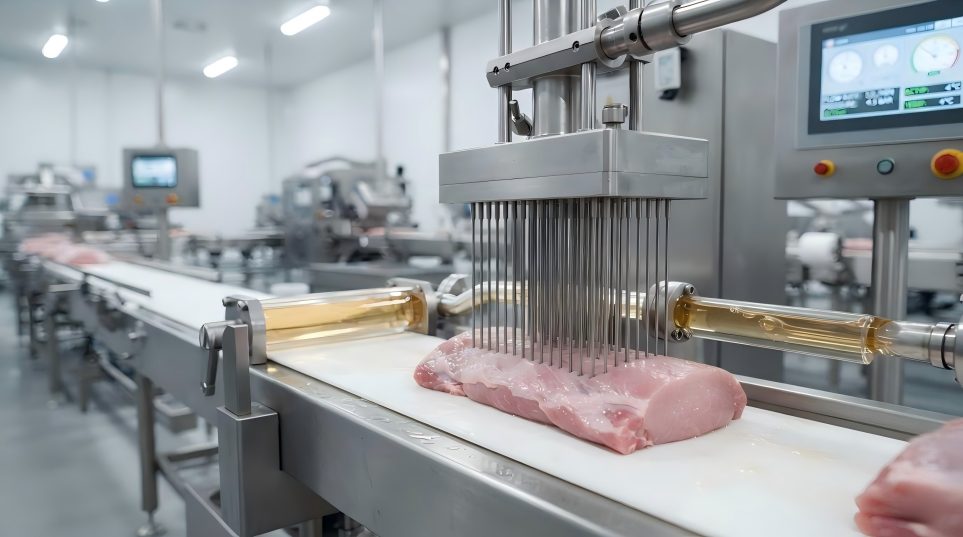
Automated meat processing utilizes brine injection for whole muscles like premium hams. However, suspending dry botanical powders in brine causes nozzle clogging and filter blockages, skyrocketing maintenance downtime.
Our 10% to 50% carnosic acid rosemary oil eliminates this friction. As a fully solubilized liquid, it integrates into aqueous brine via shear-emulsification, flowing through micron-level nozzles with zero sediment accumulation.
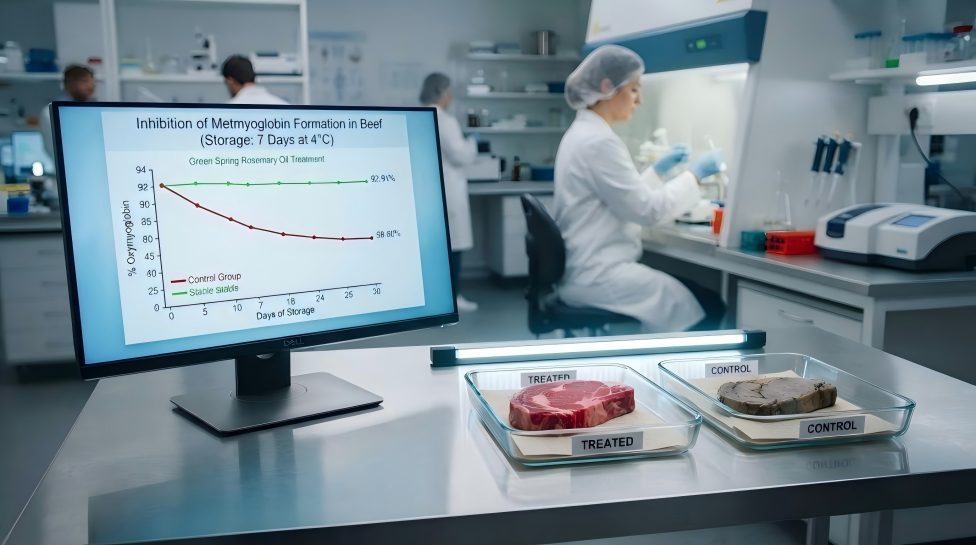
Beyond fluidics, our oil’s molecular dispersion yields tangible shelf-life metrics. In 4°C storage trials under retail display lighting, fresh meat matrices treated with 250 ppm of carnosic acid oil demonstrated a direct reduction in rancidity (POV) and a strict deceleration of myoglobin degradation (graying):
Storage Duration (Days at 4°C) | Control Peroxide Value (meq/kg) | Green Spring Oil POV (meq/kg) | Control Metmyoglobin Formed (%) | Green Spring Oil Metmyoglobin (%) | Finished Meat Surface Appearance |
Day 0 (Baseline) | 0.25 | 0.24 | 3.5% | 3.4% | Bright Cherry Red / Fresh |
Day 3 (Mid-Shelf) | 1.84 | 0.62 | 22.8% | 8.1% | Control fading; Oil retains hue. |
Day 7 (End-Shelf) | 4.12 | 1.15 | 56.4% | 14.2% | Control turns gray; Oil stays red. |
The empirical results prove that our oil-soluble carnosic acid delays lipid oxidation by over 70% while keeping metmyoglobin formation well below the consumer rejection threshold of 40%.
By pairing total fluid process stability with robust pigment anchoring, this refined liquid extract serves as an industrial-grade preservative for high-speed sausage, ham, and fresh meat case packaging lines.
Request an R&D Sample (10g / 20g)
Thermal Stability: Carry-Through Protection in Thermal Processing
Synthetic antioxidants (BHA/BHT) face severe limitations in meat manufacturing due to thermal volatilization. During smokehouse cooking, baking, or steam pasteurization (75°C to 110°C), chemical stabilizers decompose or steam-distill out of the matrix, leaving packaged meat vulnerable to post-processing rancidity.
Conversely, グリーン・春技術'です carnosic acid rosemary oil delivers exceptional carry-through properties. Backed by its triterpenoid structure, this active antioxidant molecule remains physically intact during rigorous thermal cycles without chemical cleavage.
Our performance metrics tracking active component retention under industrial thermal exposure are structured below:
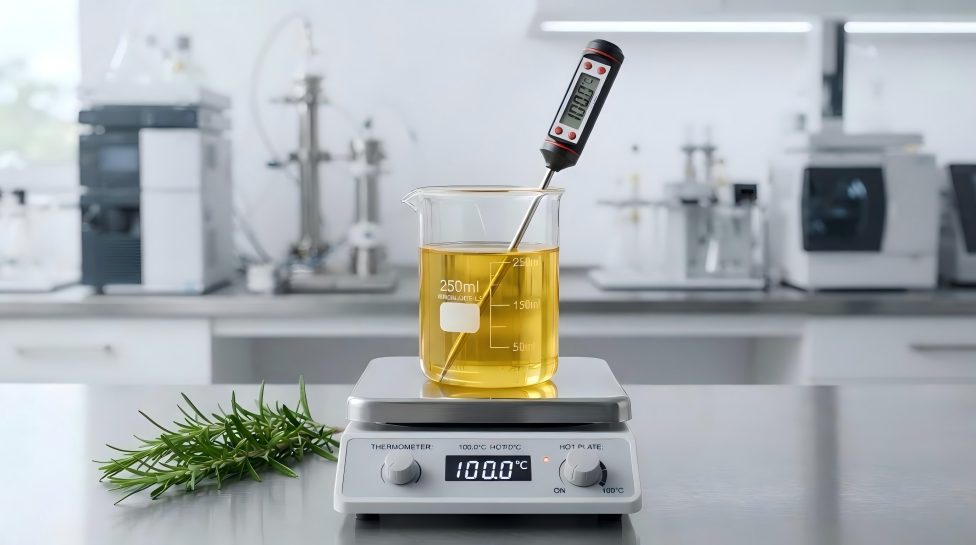
Antioxidant Variant (Tested at 100°C) | Initial Active Concentration | Active Retention (45 Min Cook) | Active Retention (90 Min Smoke) | Post-Processing Stabilization Risk |
Synthetic BHA | 200 ppm | 64.2% | 45.1% | High volatilization; triggers rapid lipid oxidation during refrigerated storage. |
Synthetic BHT | 200 ppm | 73.8% | 53.4% | Severe steam-distillation loss; fails to secure long-term cold-chain color hold. |
Green Spring Carnosic Oil | 200 ppm | 95.1% | 90.4% | Structurally stable; delivers uninterrupted carry-through protection to end consumers. |
The empirical matrix confirms our oil-soluble extract survives cooking and smoking phases intact. Active molecules embedded within meat lipids continue suppressing hexanal formation long after packaging, securing cold-chain shelf life.
For industrial sausage and ham processors, this thermal resilience eliminates post-cooling chemical interventions. It optimizes manufacturing throughput, lowers formulation costs, and guarantees continuous, clean-label antioxidant defense across the commercial lifecycle.
Request Latest Official Batch COA
Supply Chain Verification: Eliminating Cross-Contamination Risks
Industrial meat formulation leaves zero margin for pathogen proliferation or unlisted allergen cross-contact. To protect global sourcing teams from severe product recalls, グリーン・春技術 operates dedicated, plant-only extraction facilities audited under top-tier GFSI benchmarks: BRCGS Grade A and IFS Food.
Our specialized raw material safety qualifications are structured below:
Supply Chain Asset | Certification Status | Specific Meat-Industry Sourcing Value |
Pathogen Shield | BRCGS Grade A | Strict micro-environmental control; eliminates Salmonella and Listeria risks. |
Allergen Isolation | IFS Food Certified | Plant-only processing; guarantees 100% soy, gluten, and nut-free status. |
Import Clearance | FDA Registered & Non-GMO | Delivers fully verified regulatory dossiers for seamless customs clearance. |
Every shipping lot undergoes flash sterilization, yielding an oil blend with low microbial counts. By utilizing our 26-year manufacturing infrastructure, your QA team can expedite vendor onboarding and cut on-site audit costs, ensuring clean-label compliance from a trusted source.

Technical FAQ: Stabilization Solutions for Processed Meats
Our technical team addresses critical queries from meat chemists and facility production managers regarding natural antioxidant blending and color stabilization:
Q: Will adding 10%–50% rosemary oil impart a perceptible herbal or camphor odor to final meat products?
A: No. At recommended commercial inclusion rates of 150–350 ppm, our refined oil blend completely dissolves into raw animal fats. It suppresses hexanal (rancidity odor) formation without altering target sausage or ham seasoning profiles.
Q: How does this oil blend stay stable in aqueous brine solutions without separating?
A: Our standardized oil utilizes a balanced lipophilic matrix. During brine preparation, applying standard shear-emulsification or high-speed mixing distributes the oil into uniform, micro-sized droplets that flow through injector nozzles without sedimentation.
Q: Does carnosic acid rosemary oil affect the natural binding or texture of emulsified meat paste?
A: No. Unlike crude botanical powders that absorb water and disrupt salt-soluble protein extraction, our liquid oil functions as a pure lipid-phase stabilizer, maintaining excellent emulsion stability and final meat texture.
Q: What protocols ensure this rosemary extract is free from meat-industry allergens like soy or gluten?
A: Under our audited BRCGS Grade A and IFS Food frameworks, we operate a dedicated, plant-only botanical extraction facility. Every batch undergoes automated screening to ensure total isolation from soy, dairy, gluten, and nut cross-contact.
Evaluation Lots: Begin Refinery & Injection Trials
Validating natural lipid stabilizers for automated meat cutting, chopping, and brine injection lines requires concrete performance data. Green Spring Technology delivers batch-certified documentation to accelerate your internal corporate verification and pilot-scale trials.
Align our technical support with your factory's immediate operational goals:
For Blending Engineers & R&D: [Secure a 20g Free Testing Lot] to run multi-needle injector fluidic checks, lipid phase solubility, and internal metmyoglobin color anchoring trials.
For Procurement & QA Directors: [Access the Full Compliance Dossier] to download allergen-free certificates, microbiological screening sheets, and direct factory price charts for cost-in-use planning.
-
Prev
Water-Soluble Rosemary Extract for Beverages: Preventing Browning and Sedimentation
-
次
Liposomal CoQ10 Powder: Solving Bioavailability Barriers in Anti-Aging Formulas